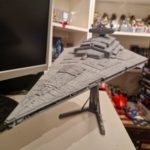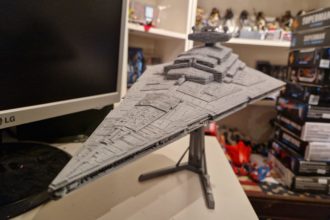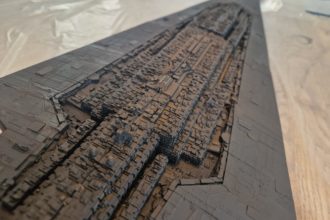
In the golden age of hobby culture — where mini painters, gunpla builders, scale‑model purists, and 3D‑print alchemists all share the same digital workbench — one debate refuses to die: Should you switch between a traditional brush and an airbrush while painting your models?
Spoiler: most creators do. Second spoiler: it’s not always as smooth as your freshly primed armor panel.
In workshops, garages, and hobby rooms around the world, a quiet conversation hums beneath the sound of compressors and the clink of paint jars. It’s a debate as old as the first bottle of hobby acrylic:
When should you switch between brush and airbrush — and is the hybrid workflow truly worth it?
From scale modelers and gunpla builders to miniature painters and 3D‑print finishers, today’s makers are embracing a more flexible, tool‑agnostic approach. This isn’t about choosing sides. It’s about choosing the right tool for the right moment — and understanding the craft behind both.
Welcome to the editorial deep dive into the techniques shaping the modern model‑making scene.
The Airbrush: Precision Engineering for Perfect Surfaces
The airbrush has become the signature tool of the contemporary builder — a piece of equipment that feels as essential as a hobby knife or sanding stick.
Where It Excels
- Large, smooth surfaces: aircraft fuselages, car bodies, mech armor, creature busts
- Pre‑shading and modulation: subtle tonal shifts that bring realism to life
- Priming without obscuring detail: especially valuable for 3D prints
- Consistent coverage: ideal for multi‑part kits and color‑blocked designs
An airbrush is the modeler’s equivalent of a precision milling machine: controlled, consistent, and capable of finishes that brushes simply can’t replicate.
The Brush: The Maker’s Most Trusted Hand Tool
Despite the rise of compressors and spray booths, the humble brush remains the backbone of the craft. It’s the tool that connects the maker directly to the model — no air pressure, no distance, just paint and intention.
Where It Shines
- Detail work: cockpits, panel lines, rivets, insignias, miniature faces
- Weathering: chipping, streaking, drybrushing, oil rendering
- Corrections and touch‑ups: the essential cleanup tool
- Texture: something no airbrush can truly mimic
If the airbrush is the machine, the brush is the artisan’s hand — expressive, precise, and irreplaceable.
The Hybrid Workflow: The Modern Maker’s Signature Technique
Today’s builders aren’t choosing between tools. They’re combining them — often within the same step of a project.
Why the Hybrid Approach Works
- Airbrush for the foundation: smooth basecoats, gradients, modulation
- Brush for the character: weathering, highlights, fine detail
- Airbrush for finishing: varnish layers, tinting, subtle shading
- Brush for refinement: panel lining, edge definition, final touches
This layered approach mirrors the way professional modelers work in studios and competitions. It’s not about speed or convenience — it’s about control.
The Pros: What You Gain by Switching Tools
1. Professional‑Grade Finishes
Smooth airbrushed surfaces paired with hand‑painted detail create a finish that feels both engineered and handcrafted.
2. Efficiency Without Sacrificing Quality
Airbrush for coverage, brush for precision — a workflow that respects both time and craftsmanship.
3. Versatility Across Model Types
Whether you’re painting:
- a 1/35 tank
- a 1/100 mech
- a resin garage kit
- a 3D‑printed dragon
- or a squad of tabletop minis
…switching tools lets you adapt to the model’s needs.
4. Greater Artistic Control
You’re not locked into one technique. You’re free to choose the method that best expresses your vision.
The Cons: The Realities Every Maker Knows
1. Setup and Cleanup Interrupt Momentum
Airbrushes demand prep. Brushes demand discipline. Switching between them requires workflow planning.
2. Two Skill Sets to Maintain
Airbrush control and brush control are different crafts — and both require practice.
3. Paint Behavior Changes Between Tools
Thinning ratios, finish differences, and color shifts can complicate consistency.
4. Masking and Overspray
Especially challenging for:
- multi‑color gunpla
- aircraft camouflage
- detailed 3D prints with deep recesses
5. Space and Cost
Brushes fit in a cup. Airbrush setups require a corner of your workshop.
Where the Hybrid Workflow Truly Excels
Scale Models
- Panel modulation
- Subtle weathering
- Realistic surface variation
Gunpla & Mecha
- Armor shading
- Metallic finishes
- Clean color separation
Miniatures
- Zenithal priming
- Smooth blends
- Sharp highlights
3D Prints
- Smoothing layer lines
- Organic shading
- Large‑surface gradients
Resin Kits
- Skin tones
- Hair transitions
- Fabric detailing
Final Thoughts: The Maker’s Toolbox Is Bigger Than Ever
Switching between brush and airbrush isn’t a trend — it’s the natural evolution of the craft. Today’s modelers aren’t defined by their tools. They’re defined by their results.
The modern bench is a place where engineering meets artistry, where machines and hand tools work side by side, and where every model — whether printed, cast, or assembled — becomes a canvas for technique.
Use the airbrush when it serves the build. Use the brush when it serves the detail. Use both when it serves the vision.